
My grandfather Michael Bastian John left chaos in his trail when he died in 1934. Many lives were affected profoundly but in our family, there was no dwelling on what went wrong in the past.
I know people from other families who can spend an evening recalling events that occurred 50, 60 years ago or even further back, with details so clear you would think the storytellers were present to witness it all. But no, they are retelling what an earlier generation described vividly.
Not in our family. My grandfather left a widow and 10 children – my mother, her five brothers and four sisters, yet none had stories to share and pass down the years. Rather, it seems to me now that they chose to live in the present, looking forward not back, and that allowed them to keep moving on.
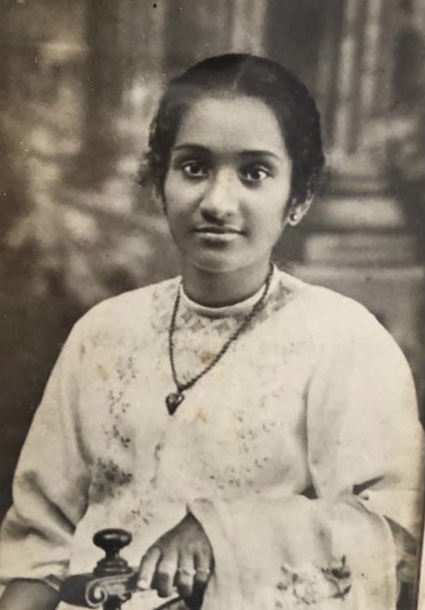
My grandmother Isabella lived another six-and-a-half years after her husband died, before dying herself at 46 on March 3, 1941. What turmoil she must have known in that final period of her life.
Michael had left her a stack of debts. Charlie, her youngest child, was not yet four. Her eldest, Ivy, was 19 and working for the Malayan Railways, the only one with a job and whose pittance of a salary went to her mother.
Michael’s five orphaned nephews D.C. Joseph, John, Albert, Jacob and Michael were also living with the family, and the older ones would have been in their 20s and working too. How did they help, if they did?
Who was kind to Isabella through that time of grief and desperation? Who advised her, sat with her, showed her how to cope? Her children never dwelt on those years when their lives were turned inside-out.
There are no family accounts that either of her brothers, Victor and William Rozario, was a helpful presence through the turmoil she experienced. Both had large families of their own.
There might have been more contact with her sister Francina, who lived in Seremban, south of Kuala Lumpur, with her husband Paul Pereira and their sons. A kind remark or fond reminiscence every now and then from my mother or one of her siblings suggested a warm connection with the Pereiras.
A cousin, Romuald “Sunny Achen” Lopez, helped. There was a time when the Johns lived with the Lopezes, though the sequence of events is fuzzy.
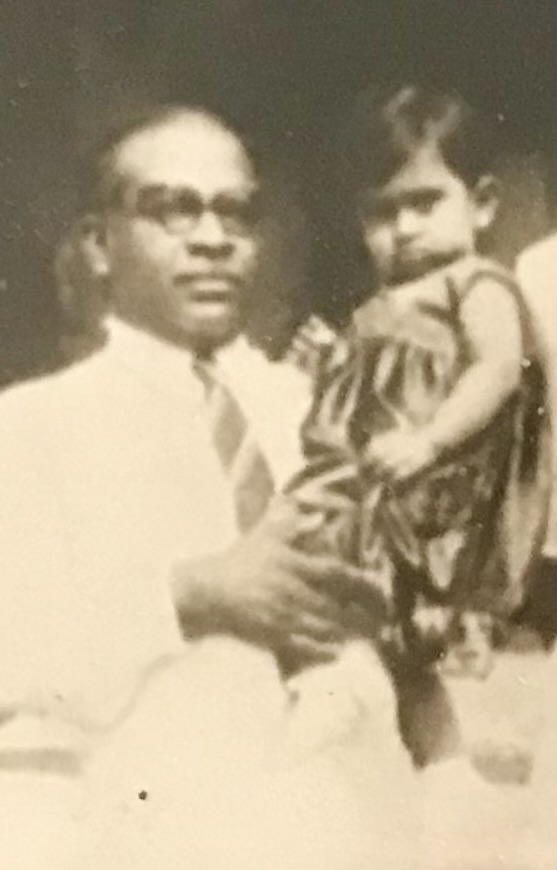
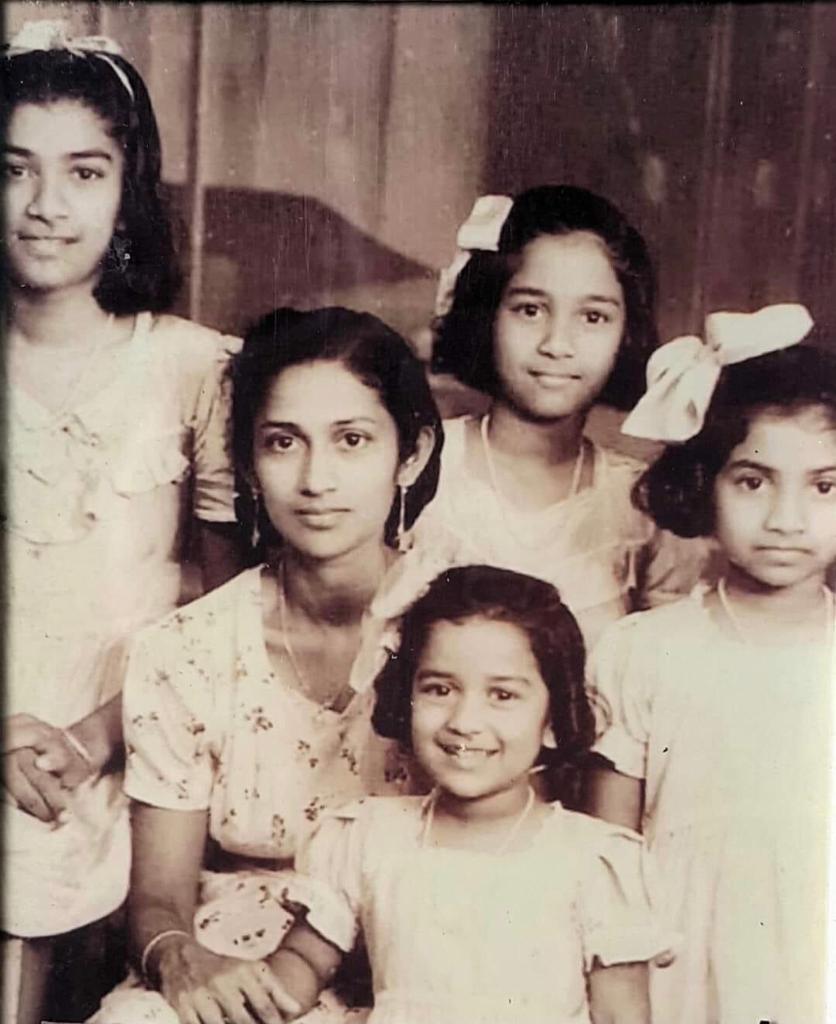
P. Sivaram proved a big help to Isabella, had four daughters with her eldest child Ivy, and introduced two of her sisters to the men they would marry. He is seen with Leela, my eldest cousin. In the group photo, Ivy is surrounded by her four daughters, clockwise from top left: Leela, Joan, Deanna and Agnes.
Those were years of upheaval for Isabella, whose family life was disrupted and her children scattered.
Her three youngest daughters Elsa, Beatrice and my mother Agnes were sent to the Catholic nuns who ran the Infant Jesus Convent on Bukit Nanas.
The sisters took in abandoned babies, orphans and fee-paying boarders. They maintained a hierarchy at the boarding school, decided by the fees the girls’ parents paid or did not pay.
Elsa, Beatrice and Agnes John were near the bottom of the heap. My mother, five when her father died, only ever recalled her days at the convent as a wretched period of her childhood, when she first became aware there were people who looked down on her because of her lot in life.
Agnes told stories. Throughout her life she never held back from describing how much she despised the “French nuns” who were harsh disciplinarians, especially towards poor boarders like her.
She developed a lifelong dislike of boiled carrots and potatoes. She would shove a plate of bland vegetables away at the table and relate once more how the nuns forced the girls to finish everything on their plates or face punishment for wasting food. And add how she devised ways to hide her boiled vegetables to throw or pass to a friend who minded them less.
Agnes also developed an enduring affection for her sister Elsa during those convent days. She never tired of recalling the day she was being disciplined by a nun who accused her of some misdemeanor, when Elsa confronted the nun and told her to stop.
The upshot was that Elsa was ordered to go home and not return. Mum eventually left school early too, but not before learning to read and write in her distinctive cursive script.
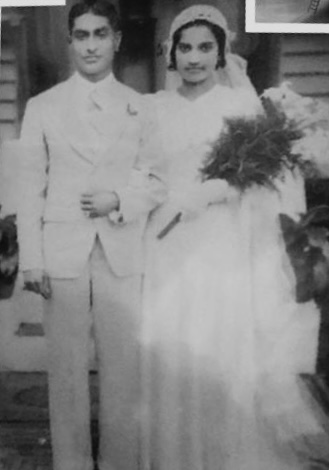
Gregory Leo D’Silva and Isabella (Girly) John.
Isabella’s two oldest daughters, Ivy and Girly, settled down in quick succession in the years following their father’s death. Her sons Justin, Cyril, Alexander and Teddy went to live with their married sisters. Charlie, the youngest, was sent away too, but pined for his mother and returned.
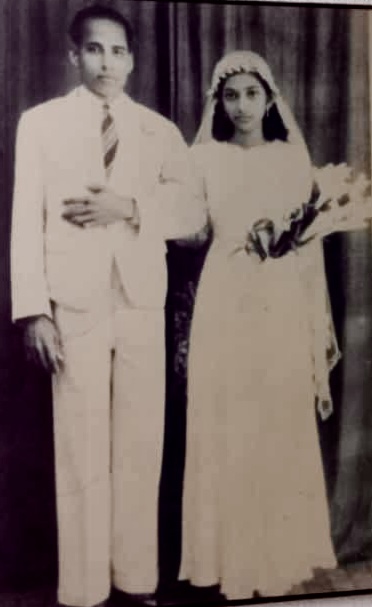
Peter Panicker and Elizabeth (Elsa) John.
According to my eldest cousin Lillian, whom everyone calls Leela, her parents Ivy and P. Sivaram were Isabella’s strongest support after Michael’s death.
Sivaram was a Hindu from Travancore and had children in India from an earlier marriage. He worked for the Malayan Railways and for a time, lodged with the John family and liked them.
Leela recalled her mother Ivy telling her it was Sivaram who helped clear Michael’s debts, and Ivy could see he was a good man.
So when Sivaram proposed, Ivy said yes despite his being considerably older and not Catholic. She also became an instant stepmother to two of his daughters who came from India. The couple went on to have four daughters of their own, Leela and her sisters Joan, Deanna and Agnes.
As a Railwayman, Sivaram got to know many of the young men arriving from India to find work in Malaya. He introduced Gregory Leo D’Silva to Ivy’s younger sister Girly, and Peter Panicker to Elsa.
Isabella lived long enough to see her first three grandchildren, Ivy’s daughters Leela and Joan, and Girly’s first-born, Anne.
She died too soon, but was spared the turmoil of World War II and the hardship of the Japanese Occupation of Malaya.
My grandmother was among the first to be buried at Kuala Lumpur’s new Christian cemetery in Cheras, on the outskirts of the town. There was no more room at the old Birch Road cemetery where Michael had been buried.
I realise this is such a pathetically bare account of my grandmother’s final years, but 2024 is too late to be asking my cousins: “Did your mother or father tell you anything about what that time was like?”
My cousin Leela shares all that she can recall, but tells me emphatically that any sympathy I may have for our grandfather Michael Bastian John is misplaced.
“Our grandfather was a self-centred, selfish man. That is why he had a multitude of regrets in his last days. Please don’t waste your genuine sorrow on him,” she told me, after seeing my sadness at reading the last entries in his diary just before he died.
My only response, always, is that I know our grandfather did one thing right and I will always be grateful.
There was that day, when he was a young man who left his home in Trivandrum and got on a boat for Malaya, with no inkling of what the future held, and never went back.
Then he married Isabella and they lived out their brief lives in Kuala Lumpur for better or worse, which meant their children were all born in this corner of South East Asia. Not India.
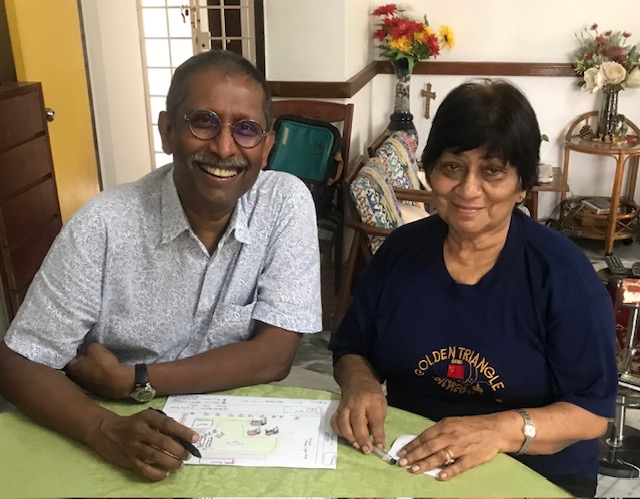
My eldest cousin Leela, who turned 86 in March 2024, told me all she could remember and said I should care less about our grandfather. But I am grateful his wandering made us Southeast Asians.
Photos courtesy of Clement D’Silva, Philomena Panicker and Lillian Sivaram.
Next: My father, D.C. John, takes over my grandfather’s House Register, and fills a few pages himself.
 Alan John