
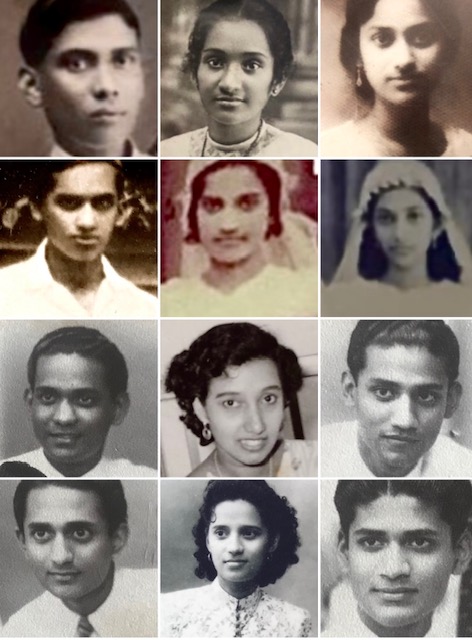
My grandfather’s notes show that Michael and Isabella spent several years in the Weld Road area of Kuala Lumpur, and the nearby St John’s Church was where all their children were baptised.
The godparents they chose for their sons and daughters almost all had Malayalee Catholic surnames with Portuguese or Spanish roots: De Cruz, Lopez, Pereira, Gomez, De’Netto, Loabe. Perhaps Gabriel, Manuelpillai and David were Malayalee too.
My mother’s godparents, Romuald Constantine Lopez and his sister Roselene, were cousins. My uncle Cyril’s godparents, Mr and Mrs S.G. De’Netto, were relatives too. But who were all the others? Were some family members too, or were they good friends, Catholic men and women who had come from Travancore around the same time as Michael and Isabella?
What was Michael and Isabella’s home life like? His unmarried sister Agnes, who lived with them and was called Amachi, would have been a big help as the family kept expanding.
Guessing by the family traditions I grew up with, I imagine theirs was a home where food was a major focus of celebrations.
My mother’s older sister Girly once told me that festive meals in their parents’ home were elaborate affairs. There would be a first course of a meat and vegetable stew, a roast and salad, eaten with bread. Then came the second course of curry, cutlets, pickles and rice. According to my aunt, Isabella and Amachi cooked these feasts.
For my mother and her siblings too, home-cooked food was always the centrepiece and source of pride at birthdays, Christmas and Easter. There seemed to be a neverending conversation about food whenever people came together.
I like to imagine that Isabella and Michael were people who did not hold back displaying love and affection. Where else could my uncles and aunts have got their best trait, the spontaneity to break out in smiles, hug and kiss you on sight, and then feed you.
My uncles drank whiskey at family gatherings and from time to time would quarrel over their wives, and then there might be months of not seeing them. But they were men who kissed each other when they made up, and the rest of us too.
The best family parties were when my uncles would end the evening singing their songs after dinner. Let The Rest Of The World Go By and The Prisoner’s Song turned up often enough for all of us children to learn the lyrics. Forever And Ever, with the line “Let bygones be bygones forever”, always had everyone joining in enthusiastically, hopefully.
Through all the ups and downs, tragedies, hardships and occasional estrangements over the decades, there was an unmistakeable warmth between these siblings, and perhaps that reflected something good about being Michael and Isabella’s children.
By the time Isabella died in March 1941, she was a grandmother. Ivy had her two eldest daughters, Lillian and Joan. Girly’s first child Anne was born too. Elsa was married, but did not have children yet.
World War II and the Japanese Occupation from 1942 to 1945 disrupted the younger children’s studies, and the boys split up and moved in with their married sisters.
My mother was sent to the Bukit Nanas Convent boarding school and always described it as an awful period of her life. She developed a lifelong dislike of French Catholic nuns and the boiled vegetables they served at every meal. She detested the nuns’ strictness, convinced they were extra harsh towards her because she was an orphan and poor.
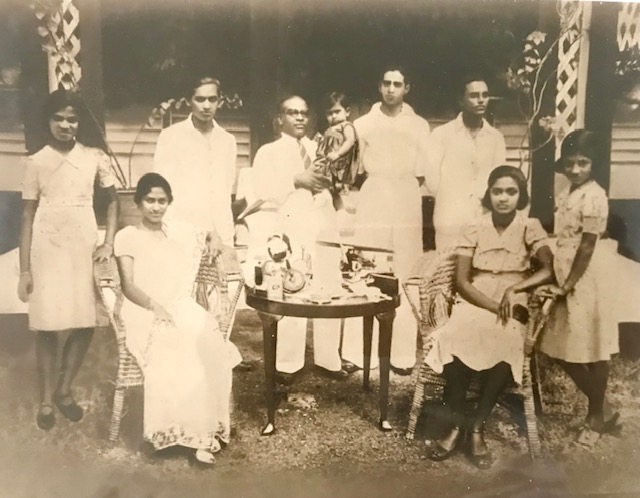
Michael and Isabella’s first grandchild was my cousin Lillian, whom we all called Leela. She was the eldest daughter of my aunt Ivy, seated left. Her husband Sivaram is standing in the centre, holding Leela. This photo, is the only one that shows my eldest uncle Justin, standing second from left.
After the war, the boys had enough secondary schooling to all land jobs as government clerks. It was the most stable occupation you could hope for at the time, because you were provided quarters to live in and promised a pension when you retired.
Of my four uncles who married. Justin’s wife was Chinese, Alex’s was Sinhalese, Teddy married a Tamil and Charlie married a Malayalee-Tamil.
Three of the John sisters worked too. Ivy was a machine operator in the Malayan Railways. In the days before computers, machine operators churned out paysheets and other documents. Beatrice ran a kindergarten in Sentul, Kuala Lumpur. My mother worked briefly as a telephone operator at a law firm after my father died. Girly and Elsa were housewives.
All the sisters married Malayalee men. Ivy’s husband was Hindu, the others were Catholic. My mother was the only one who married twice.
Girly and Elsa settled in Taiping, in the northern state of Perak, while everyone else remained in Kuala Lumpur. Among the siblings, Justin died youngest, at 29, and my mother lived longest to 93. Michael and Isabella had 50 grandchildren.
Michael and Isabella’s children
IVY MARY 1915-1961 (46)
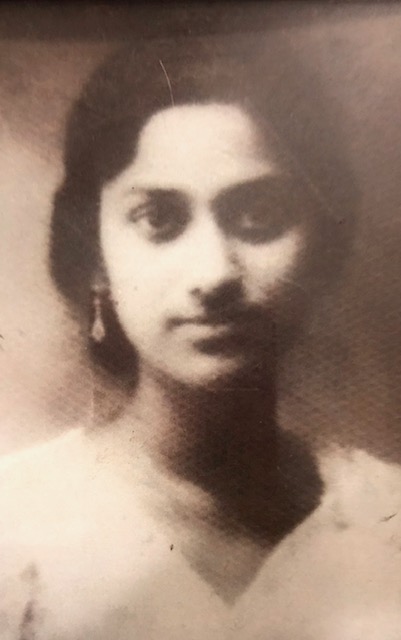
Ivy’s life mirrored Isabella’s in some ways. She married an older man and was widowed early. Her husband, Pathmanabhan Sivaraman, was a Malayan Railways travelling auditor who had been married with children in India and brought two daughters to Malaya. Ivy became stepmother to Rethi Thevi and Santha Kumari before she went on to have four daughters, Lillian, Joan, Deanna and Agnes. Lillian, whom we all called Leela, said it was her father Sivaram who helped Isabella settle Michael’s debts. Sivaram was fond of the family, and might have lodged with them at some point. He was sorry to see the dire state Isabella was left in when Michael died. When Sivaram died in 1947, Ivy’s daughters were aged nine, seven, five and one. Fourteen years later, Ivy died of cancer, at 46 like her mother.
JUSTIN 1917-1946 (29)

Justin had a reputation as something of a playboy before he surprised everyone by marrying a Chinese woman who already had a daughter. Mary Magdalene Tan Soon Neo bore him a son, Dennis Michael John, and was pregnant with their daughter Audrey Theresa John when he died from tuberculosis, aged 29. He breathed his last at the home of his sister Girly and brother-in-law Grego, with his brothers Alex and Teddy at his bedside. A year later, when Justin’s widow said she could no longer keep the children, my parents adopted Dennis and Audrey, whom I grew up knowing as my oldest siblings. All our lives, we had not seen a photo of Justin. Then, one day in 2022, I was visiting my cousin Leela at her home when I noticed a framed old black-and-white photo on her wall and asked who were all the people in it. She was the baby in her father’s arms, and the others were her mother, an aunt, her half sisters and three men. One of them was Justin. My sister Audrey was in tears that day, seeing her father’s picture for the first time.
ISABELLA “GIRLY” 1918-2001 (83)
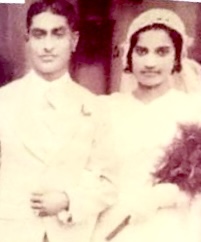
Girly married rubber estate chief clerk Gregory Leo D’Silva and travelled with him to various plantations in the Malayan peninsula. They settled in Taiping, Perak, and had 16 children: Anne, Mary Magdalene, Pressina Isabella, Philomina, Louisa, Marian Leo (Michael), Joseph, Charlotte, twins Francis and Anthony, Joachim, Clement, Jude, Gerard, Jacqueline and Caroline. It was Ivy’s husband Sivaram who introduced his sister-in-law Girly to Malayalee bachelor Gregory at the Church of St Anne in Bukit Mertajam. My Uncle Grego always said it was love at first sight for him and he knew he had met the girl he would marry. He and Girly named their first child Anne, after the church where they met, though we only called this beloved cousin Baba.
ELIZABETH “ELSA” 1922-2002 (80)
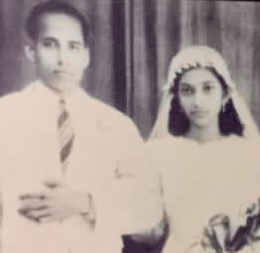
My aunt Elsa had a warm and loving personality and was someone who embraced and kissed you on sight even if she had not seen you in years. She married Peter Panicker, a dresser at a rubber plantation clinic. Later, he became a petition writer in Taiping, filling official documents for people who could not write. Elsa and Panicker had 13 children: Aelred, Isabella, Anthony, Josephine, Helen, Vincent, Francis, Philomena, Mary, Patricia, Florence, Alexander and Martina. Elsa was resilience and fortitude personified, a great cook who put tasty meals on the table through the hardest of times. In Kuala Lumpur, we knew her eldest son Aelred best, because he joined the army after leaving school and would visit on his weekends off, and relished the “home food” cooked by my mother.
BEATRICE 1923-1989 (66)
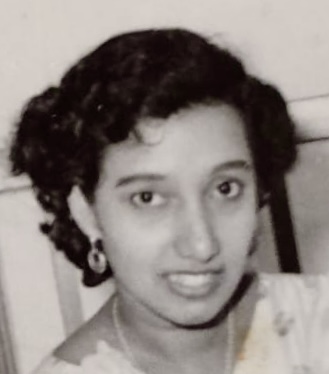
“Bee” was the only one who completed the Senior Cambridge, the secondary school leaving examination, and became a kindergarten teacher. Though closer in age to her cousin D.C. John, she married his youngest brother D.C. Michael and they had one daughter, Isabel. In their younger days Bee and her youngest sister Agnes had been close. But much went wrong between them, especially after John married Agnes, and the sisters were estranged for decades. My Uncle Michael was a moneylender and a hard man to like. He kept his wife and daughter close to him, living an almost reclusive life at their home in Sentul. After Bee, Michael and their daughter passed on, their property went to the Catholic Church.
CYRIL 1925-2005 (80)
ALEXANDER 1926-2005 (79)
THEODORET “TEDDY” 1927-1985 (58)
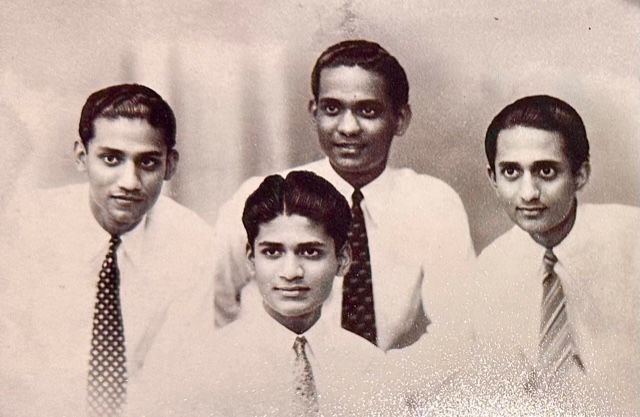
My handsome uncles, (left to right, background), Alex, Cyril and Teddy; and Charlie in front.
Cyril never married. He was a clerk in the Postal Department, a unionist, the original party guy and a great storyteller. He hosted Cantonese dinners at the Kum Leng restaurant along Pudu Road near St Anthony’s Church, and these were always a treat. At family get-togethers, he would gather the children to sit in a circle and play games, handing out five-dollar bills as prizes. He missed home food and whenever he came over for a meal, he would ask my mother to cook Isabella’s Pork Vindaloo, Chicken Curry and Cutlets.
Alex married Ruth Eva Siriyavathy Perera, who was Sinhalese, Anglican and worked in the typists’ pool of the Postal Department where he was a clerk. He said he fell for her because she was pretty and fair-skinned. She said he was nicer than his noisy brother Cyril, who worked at the same office and would swing by the typists’ pool and tease the young women there. Alex and Siri had four daughters: Patricia, Jennifer, Sandra and Brenda.
Teddy was the gentlest-natured of my uncles, the peacemaker in the family, a beautiful tenor and an adventurous cook. He worked at various government departments over the years. He married Evelyn Lingam, a teacher and principal who was Tamil Methodist, but joined the Catholic Church. They had three children: Patrick, Pamela and Ronald. Teddy’s family always included his cheroot-smoking mother-in-law Margaret Lingam, whom all of us loved and called Granny.
AGNES 1929-2022 (93)
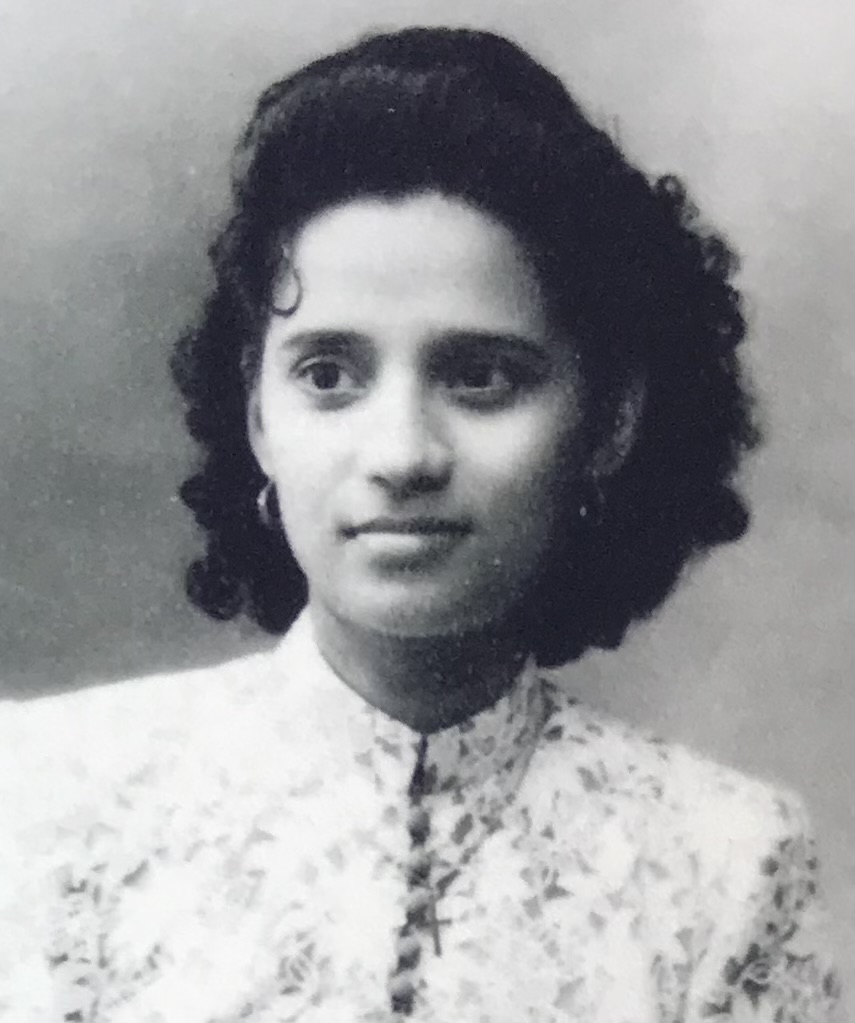
My mother was 17 when she married her cousin, D.C. John, who was 20 years older. She always said she was badgered by family members into marrying him so they could keep their Malayan Railway married quarters. John did not mistreat her, but she never hid her resentment at leading “a servant’s life” in their early years. His goodness showed when he decided to adopt her brother Justin’s children, Dennis and Audrey, after their mother said she could no longer keep them. Agnes had my sister Barbara and me before John died, leaving her a widow at 27. Three years later, she married an Anglo Indian Railwayman, Henry Lang Taylor, also 20 years older. They had two daughters, Elizabeth and Carolyn. This time, she said, she found love.
CHARLES 1930-1994 (64)
Charlie was everybody’s favourite. He was kind, funny, loving and generous. After my father died, my mother took us to live with him. He was just 25 and working in the district office in Jinjang North, a new village on the outskirts of Kuala Lumpur. We moved out when my mother remarried, but then their eldest sister Ivy moved in, as she was ill and dying of cancer. Through his 20s and early 30s, Charlie cared for his sisters and their children through periods of sorrow, hardship and uncertainty. He was 33 when he married Lily Alfred, who was Catholic and a decade younger, a modern woman who worked as a secretary. They had three children: Sharon, Melanie and Tony.
PHOTOGRAPHS: The photos used here are from my mother’s collection, and from my cousins Leela Sivaram, Deanna Sivaram, Bella Pannicker, Clement D’Silva and Patrick John.
Next: Another diary, and a list of names of invisible men from Travancore.
I don’t know where this will go, but I’ll just write down what I know and maybe someday someone else will figure it out.
 Alan John